Introduction
The water flosser has become one of the fastest-growing oral care products in Europe and the U.S. Consumers expect compact, durable, and waterproof devices that are comfortable to use while still affordable for e-commerce markets. Behind every successful product lies a careful structural design process that balances ergonomics, manufacturability, waterproofing, and cost efficiency.
In this article, we will walk through the full process of structural design for a water flosser, showing how engineering-led product development transforms a concept into a reliable, mass-producible consumer product.
1. Project Background
Oral care products are increasingly demanded across Western markets. Our client requested a compact, IPX7 waterproof water flosser that could stand out in a competitive market.
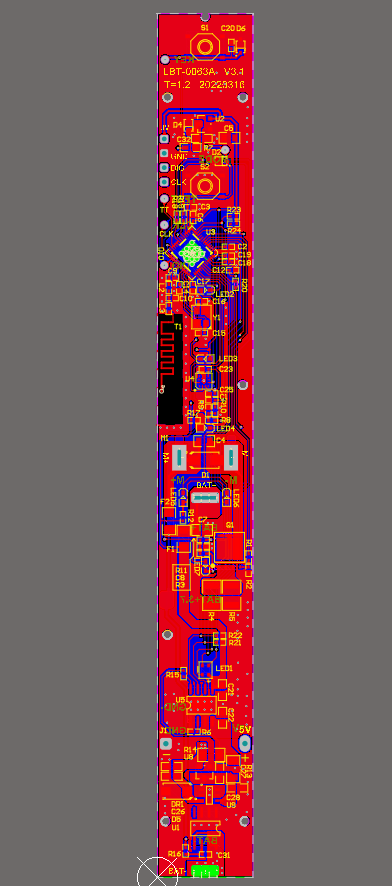
The main challenge was fitting the motor, pump, water tank, battery, and PCB into a limited housing. At the same time, the product had to remain easy to use, cost-effective to manufacture, and reliable enough for long-term operation.
2. Structural Design Approach
To tackle these requirements, we started with a systematic breakdown:
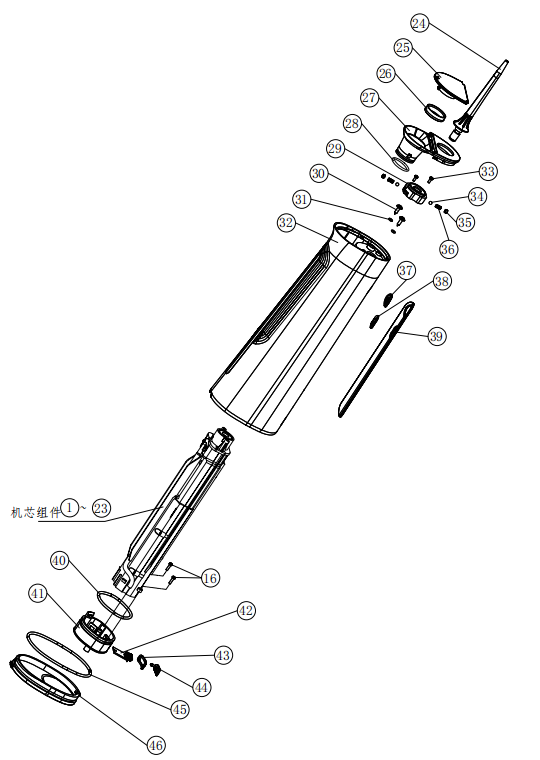
- Functional components: motor, pump, PCB, battery, tubing, and sealing parts.
- Key constraints: ergonomics, weight distribution, IPX7 waterproofing, and assembly feasibility.
- Modular design: each subsystem (battery, pump, PCB, sealing) was designed for independent testing and validation. This reduced risks during prototyping and allowed faster iteration.
This structured approach ensured that every design decision aligned with both user experience and manufacturing efficiency.
3. Internal Layout Optimization
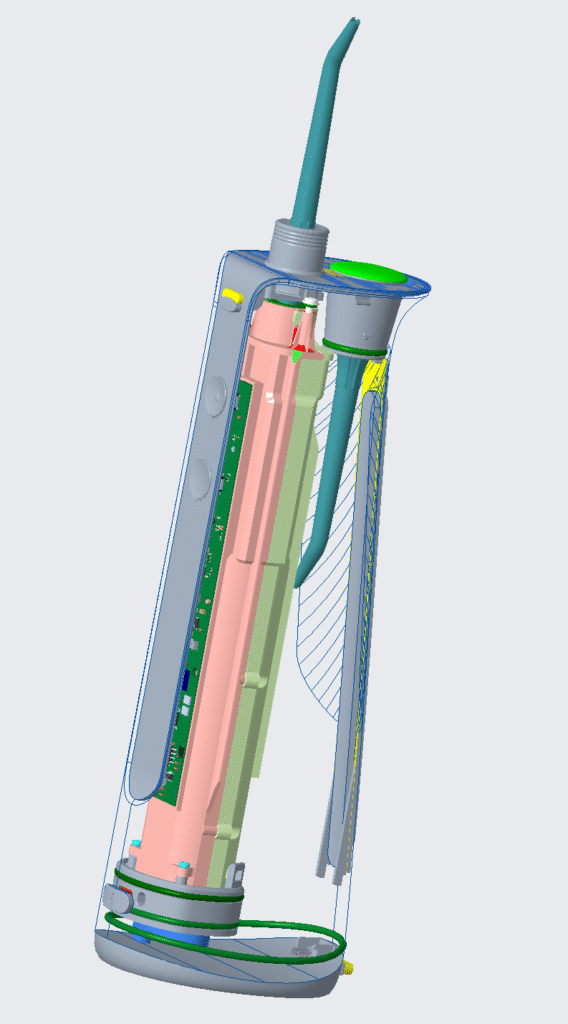
One of the toughest tasks in structural design is finding the optimal internal layout. For this project, we focused on:
- Battery and pump placement: optimized for balanced grip and improved hand comfort.
- Water tank volume vs. housing thickness: balancing user runtime expectations with mechanical constraints.
- Rapid iteration: CAD modeling and 3D printing were used extensively to validate space usage, assembly clearance, and ergonomic feel.
This phase helped us avoid late-stage design changes and reduced time-to-market.
4. Design for Manufacturing (DFM) Considerations
A strong design must also be manufacturable at scale. During the DFM stage, we focused on:
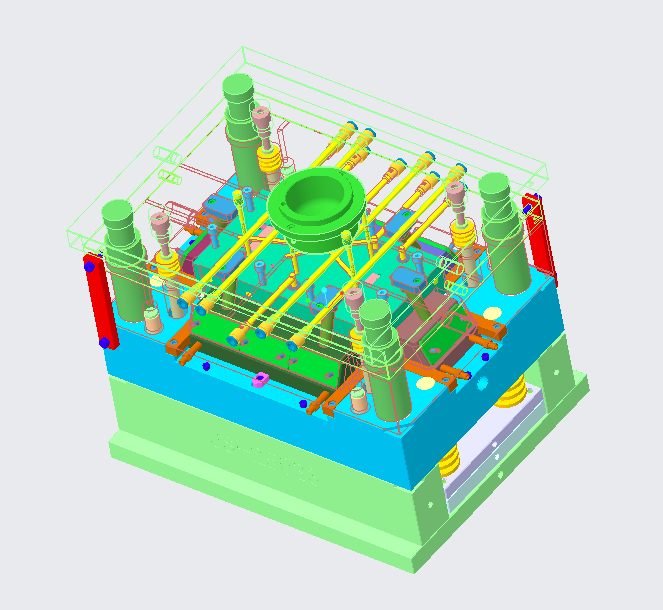
- Injection molding: carefully designed parting lines minimized sliders, reducing tooling complexity and cost.
- Wall thickness balance: adjusted to avoid sink marks and part deformation.
- Waterproofing reliability: validated O-ring compression ratios and ultrasonic welding strength to pass IPX7 requirements.
- Assembly optimization: reduced screw count, introduced snap-fit structures, and applied ultrasonic welding to shorten assembly time.
By embedding DFM principles early, we ensured that the design was not only feasible but also cost-efficient and scalable.
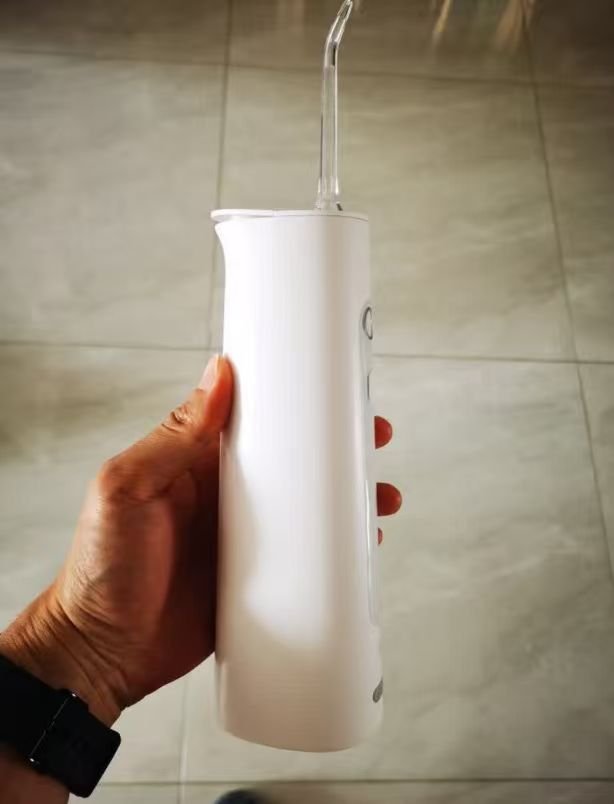
5. Results & Verification
The final prototype and trial production achieved:
- Compact design: all functional modules successfully integrated.
- High yield: >95% yield rate in trial production.
- Waterproof reliability: passed IPX7 waterproof testing under real-use conditions.
- Faster launch: reduced time-to-market with strong customer feedback from both EU and U.S. consumers.
Conclusion: Turning Concepts into Market-Ready Products
This water flosser project demonstrates how structural design and DFM are critical in bridging the gap between a product idea and successful commercialization.
From functional breakdown to internal layout optimization and manufacturing validation, every step was carefully engineered to balance performance, cost, and user experience.
If you are developing consumer electronics or oral care products and need support in structural design, prototyping, and low-volume manufacturing, feel free to connect with us at DUMU. Our expertise ensures your concept is not only innovative but also manufacturable and market-ready.
Disclaimer: This case study is based on an older project that is authorized for public sharing.
The Full Process of Structural Design for a Water Flosser | DUMU Engineering